
When “Doing the Right Thing” Goes Wrong: Retail Theft, Risk and Responsibility

The recent case involving a long-serving store manager at Morrisons—dismissed after intervening in a shoplifting incident—has struck a public nerve. On the surface, it feels simple: a loyal employee of nearly three decades tries to stop a repeat offender, is abused in the process, and loses his job. For many, that jars with a basic sense of fairness.
But scratch beneath that instinctive reaction and the picture becomes far more complicated. This is not just about one individual or one supermarket. It reflects a growing tension between rising retail crime, employee safety, corporate liability, and what society expects frontline workers to do when faced with offending behaviour.
The reality behind the rise
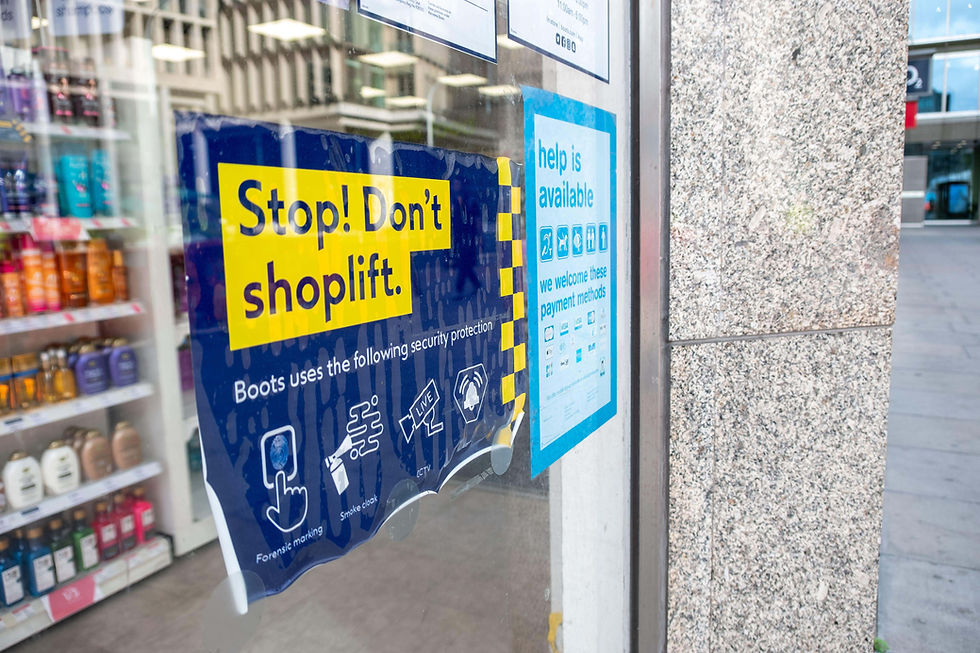
Retail theft is no longer a marginal issue—it is accelerating across England and Wales. A combination of economic pressure, organised offending, and what many perceive as reduced deterrence has created an environment where shoplifting is both more frequent and more brazen. Major retailers such as Marks & Spencer and Waitrose have publicly called for stronger intervention, reflecting what staff are experiencing daily. Stores are increasingly dealing with repeat offenders who return time and again, organised groups targeting high-value goods, and situations that escalate quickly from theft into abuse or confrontation.
From a policing perspective, this is predictable. When the perceived risk of being caught or challenged drops, and opportunity remains high, offending behaviour increases. Retail spaces are designed to be open and accessible—that is their strength commercially, but it also makes them vulnerable.
The employee caught in the middle
This is where the dilemma sharpens. Most large retailers operate strict “observe and report” policies. Staff are not expected to physically intervene, and in many cases are explicitly told not to. On paper, this is entirely logical. Physical intervention introduces risk—not only of injury to the employee, but of escalation in a public setting. It also exposes the company to potential legal consequences if things go wrong.
From my own experience dealing with incidents linked to shop theft, these situations can turn volatile very quickly. What begins as a low-level offence can escalate into violence within seconds. In that context, company policies are designed to prevent harm, not to condone offending.
Yet the reality on the shop floor is less controlled. Staff are often dealing with the same individuals repeatedly, sometimes in confrontational or abusive circumstances. In those moments, the decision to step in is rarely calculated—it is instinctive. And yet, this is precisely why the case resonates so strongly. The public reaction—calls for boycotts, support for the dismissed employee, and criticism of the company—reflects a deeper unease.
Many people feel that the individual who attempted to uphold standards has faced more immediate consequences than the person who broke them. Whether or not that perception is entirely accurate, it is powerful, and it feeds into a broader concern that low-level crime is not being robustly challenged.
The corporate calculation
From the retailer’s perspective, however, the decision sits within a different framework. Allowing staff to intervene physically—even in well-intentioned circumstances—opens the door to inconsistency and risk. One person’s measured response could become another’s unsafe confrontation.

Policies are therefore written with the worst-case scenario in mind. They are designed to remove ambiguity and prioritise safety above all else. When those policies are breached, companies often feel compelled to act decisively, not because they disregard the individual, but because they are trying to maintain a clear and defensible standard.
A question of proportionality
There is, however, another consequence that is less obvious but potentially more far-reaching. Cases like this risk creating a chilling effect on what is often referred to as the “have-a-go hero” instinct—the willingness of ordinary people to step in when something is clearly wrong. For years, there has been a careful balance in public messaging. We do not expect people to put themselves in harm’s way, but neither do we want a society where individuals feel they must always look the other way.
When stories like this gain traction, the takeaway for many is not a nuanced understanding of workplace policy, but a much simpler message: get involved, and you may pay the price. Over time, that risks fostering a more passive public response to everyday offending, particularly in environments like shops, transport hubs, and high streets.
That is where the tension lies. A policy intended to protect can, in practice, appear to undermine justice. Furthermore, The PR implications for Morrisons are actually quite significant—and a bit of a perfect storm. This isn’t just a “bad headline” story; it cuts across trust, brand identity, employee relations, and public perception of fairness.
So, this is where the debate becomes more nuanced. While dismissal in this case may be legally defensible, it is harder to argue that it feels proportionate. Context matters—length of service, intent, and the circumstances of the incident all shape how a decision is received. We’ve seen similar patterns with Waitrose recently, where a dismissal over shoplifting intervention triggered political and public backlash.
There is a credible argument that alternative responses could have achieved the same objective. A final warning, targeted retraining, or redeployment might have reinforced the importance of policy without ending a long-standing career. That kind of approach recognises both the need for consistency and the realities of human behaviour under pressure.
Legal Considerations
Legally, the situation is also more complex than it might first appear. Under Police and Criminal Evidence Act 1984, members of the public do have the power to carry out what is commonly known as a citizen’s arrest. This allows a person to detain someone committing, or reasonably suspected of committing, an indictable offence—such as theft—where it is necessary and proportionate to do so.
However, this power is far from straightforward. It requires the person intervening to justify not only that an offence was taking place, but that it was necessary to act at that moment and that the level of force used was reasonable. If those conditions are not met, the individual could find themselves exposed to legal consequences of their own. In other words, while the law permits intervention, it does not remove the risk.
For employers, this creates an obvious tension. Just because something is legally possible does not mean it is appropriate within a workplace setting. Retailers are therefore likely to restrict staff from exercising such powers in the course of their role, prioritising safety and consistency over individual judgement.
A System Under Strain
Ultimately, this case points to a broader issue. Retailers are increasingly being drawn into a frontline crime control role they were never designed to fulfil. As pressure on policing and the wider criminal justice system fluctuates, responsibility shifts—often onto retail staff who are least equipped to manage it.
In response, businesses are investing more in prevention: security tagging, controlled access to goods, enhanced CCTV, and even facial recognition technology. These measures can reduce opportunity, but they do not fully address the underlying issue if enforcement and deterrence do not keep pace.
Finding the Balance
Having spent years on the frontline, I can see both sides clearly. The employee likely acted instinctively, trying to protect the store, colleagues, and standards. The company, in turn, applied a policy designed to keep people safe and limit risk. Both positions are understandable—and that is precisely the problem. We have created an environment where staff feel compelled to act, companies feel compelled to restrain them, and offenders are often left operating in the space between those two positions.
Final thought
This is not simply a story about one supermarket or one manager. It is a reflection of a system under pressure. When doing “the right thing” leads to the wrong outcome, it usually signals a deeper imbalance. The challenge now is not to assign blame, but to address the conditions that create these situations in the first place.
Because until that happens, we are likely to see this story play out again—and again. And that’s where the real conversation should be.
Ken Kirwan
Editor: Eyes on Crime


Comments